Why an electric ladder's fit is narrower than a manual one
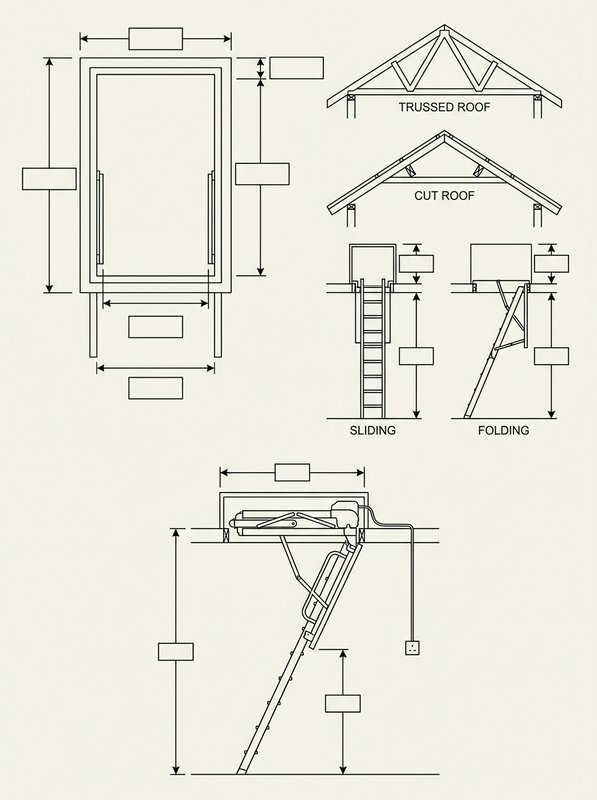
An electric loft ladder lowers and raises itself at the press of a switch. The motor and gearing that do this work take up space a manual ladder's folding frame doesn't need, so the ceiling heights it suits are narrower than you might expect.
Fakro's LET electric ladder, for example, suits room heights of 270 to 290 cm only. Outside that range, checking the height from floor to ceiling before anything else decides whether this type is even an option.
- Ceiling height: 270 to 290 cm, Fakro LET
- Folded height in the loft: 60 cm, Fakro LET
- Control set: sold with the ladder, Fakro LET
Once folded away, the LET sits at 60 cm high in the loft space, a figure worth setting against whatever headroom is left above your own hatch. And the control set that operates it isn't something you add later if you change your mind. Fakro sells it as part of the ladder.
Wiring and the control set
An electric loft ladder runs on a motor, so it needs a permanent electrical supply. That supply usually comes from a spur taken off an existing circuit, run up to the loft and connected to the ladder's motor unit. Running that spur and connecting it safely is wiring work, and wiring work inside a house is a job for a qualified electrician.
The control set is part of the ladder
Every electric ladder is sold with a control set: a wall-mounted switch or keypad, often with a remote, wired into the motor and into a safety circuit that stops the ladder if it meets resistance while it is opening or closing. That safety stop runs through the control set. Leave it out, or wire the motor without it, and the ladder loses the function that stops it closing on something, or someone, underneath it.
When you're pricing an installation, the electrician's work and the control set both belong in that price alongside the ladder itself. They're not optional parts of the job; they're what makes a motorised ladder safe to operate in the first place.