
What a sliding ladder needs once it's up in the loft
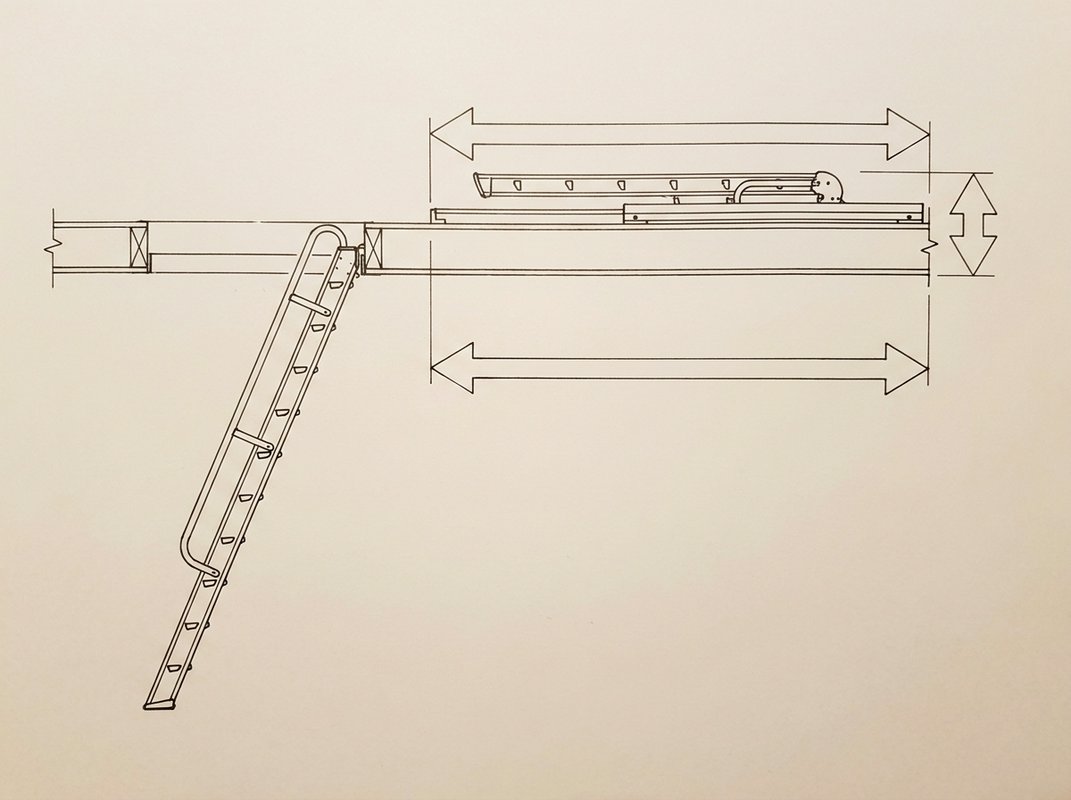
A sliding ladder runs up and down a pair of rails fixed inside the hatch, and once you've climbed it, the rails and the ladder itself have to fold flat somewhere in the loft. That means the opening is only half the measurement that decides whether one will work for you. The other half is the floor length behind the hatch and the height above it, both of which are set out in the maker's own fitting instructions.
Werner's Easy Stow is a case in point. It fits an opening as narrow as 381 mm, which is why sliding ladders get chosen for tight hatches in the first place. But Werner's instructions also call for 1,170 mm of loft floor running back from the hatch, and 710 mm of height above that floor, to fold the ladder down flat. A narrow opening on its own tells you nothing about whether that space exists above it.
Before you commit to a sliding ladder on the strength of its opening width, check the floor and height it needs once it's stowed. How to measure for a loft ladder covers how to take all five of the measurements a sliding ladder is checked against.
What a sliding ladder needs above the hatch
A sliding loft ladder doesn't fold against the hatch when it's not in use. It runs up and down on a pair of rails fixed to the loft floor, and when it's stowed the whole ladder sits flat along those rails, back into the loft space. That means the loft itself has to have two things clear: enough floor length for the ladder to slide along, and enough height above the hatch for the rail mechanism to sit when the ladder is up.